What to Avoid, How Long It Takes, and Why Sunscreen Matters Most
Whatever treatment path you choose for hyperpigmentation on dark skin, a few things stay true across the board: certain habits will work against you, results take longer than you’d like, and sun protection is non-negotiable.
What Should You Avoid When Treating Hyperpigmentation?
Avoid assuming that stronger treatment automatically means better results. Be cautious with:
- Aggressive chemical peels
- Unsupervised laser treatments
- Excessive exfoliation
- Combining several strong active ingredients at once
- Picking or scratching inflamed skin
- Treatments that repeatedly cause burning or irritation
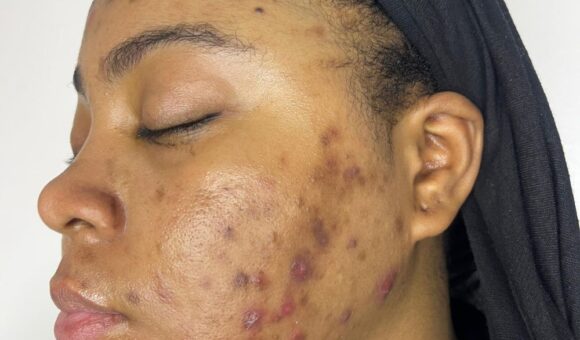
Skin shouldn’t need to be severely irritated for pigmentation treatment to work. If a treatment causes significant inflammation, it may actually increase the risk of PIH rather than resolve it.
Don’t Skip Sunscreen
Whatever treatment you choose, sun protection remains essential.
UV exposure can worsen existing pigmentation, and visible light can also contribute to it, particularly in darker skin tones. The AAD recommends broad-spectrum sunscreen for anyone treating dark spots and notes that tinted sunscreens containing iron oxides can offer extra protection against visible light specifically.
Consistent sun protection supports whatever treatment you’re using and helps reduce the chance of pigmentation coming back once it’s faded.
How Long Does Treatment Take?
Don’t expect hyperpigmentation to disappear after one treatment. Results depend on the cause, depth, and type of pigmentation, along with the treatment being used.
For example, the AAD notes melasma treatment can take 3 to 12 months to show results. PIH treatment also varies considerably between individuals. A 2024 systematic review found significant variation in outcomes across topical treatments, chemical peels, and laser therapy alike.
Consistency and appropriate treatment matter far more than chasing instant results.
So, What’s the Safest Approach?
Pulling this whole series together, the safest approach is usually one that:
- Identifies the type and cause of the pigmentation
- Controls any ongoing inflammation or acne
- Uses appropriate topical treatment where indicated
- Includes consistent sun protection
- Introduces procedures only when appropriate
- Uses treatment settings suited to the individual’s skin
A consultation is particularly useful before procedures like chemical peels, microneedling, or laser treatment, precisely because “appropriate” looks different from one person to the next.
Putting the Whole Series Together
Across chemical peels, laser, microneedling, and topical treatments, the same pattern holds: dark skin can be treated safely and effectively, but the margin for error is smaller. Sun protection and a conservative, well-selected approach do more for long-term results than any single “power” treatment.
If you’ve read through this series and still aren’t sure which combination fits your skin type and pigmentation, that’s exactly what a consultation is for.
Book a skin consultation with Botaderm and get a treatment plan matched to your skin, rather than piecing one together on your own.
Related: Treating Hyperpigmentation on Dark Skin: Where to Start · Microneedling and Topical Treatments for Hyperpigmentation