Chemical Peels: Does It Hurt, How Long Is Recovery, and Who Should Avoid Them?
You know what a chemical peel does and how it works. Here’s what actually happens during and after treatment, who shouldn’t have one, and what to realistically expect as a first-timer.
Does a Chemical Peel Hurt?
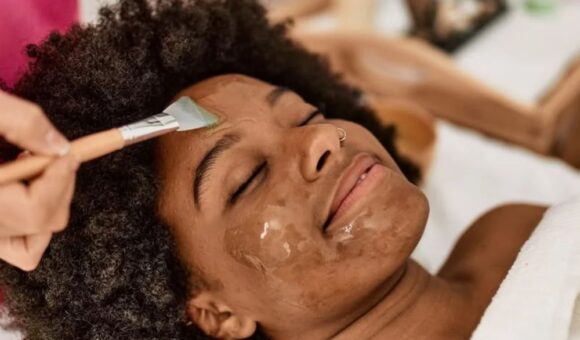
For superficial peels: most people describe a tingling or mild stinging sensation during application that settles within a few minutes. Not painful. Some providers use a small fan during application to ease the sensation.
For medium-depth peels: the sensation is more pronounced. Stinging and burning during application is common, particularly as the acid penetrates more deeply. A topical anaesthetic is sometimes used beforehand. The discomfort typically lasts only during application and the first few minutes after neutralisation.
For deep peels: these require stronger pain management, sometimes including sedation. Deep peels are not first-timer territory.
How Long Does Recovery Take?
This is where the depth distinction really matters:
Superficial peel: one to three days. Expect mild redness and possible light flaking. Most people look presentable within 24 to 48 hours.
Medium peel: seven to fourteen days per the American Society of Plastic Surgeons. Visible peeling, swelling, and redness in the first week are expected. Skin will look raw and pink before it settles. Working from home during the first week is advisable for most people.
Deep peel: two to three weeks minimum, with significant downtime, crusting, and redness that persists beyond the peeling phase.
For most first-timers, a superficial peel is the starting point, which means the recovery conversation is straightforward. Medium peels are the realistic next step for more significant concerns.
What Should You Expect After Treatment?
Immediately post-peel: redness, heat, and tightness, similar to sunburn, for 24 to 48 hours. Days two to four (for medium peels): visible peeling begins. It looks dramatic. Don’t pick. Pulling at peeling skin disrupts new skin forming underneath and can scar. Days five to seven: bulk of peeling resolves. Skin looks pink and clearer, with noticeably improved texture. Medium peel collagen remodelling continues for several months after this point.
Who Should Not Get a Chemical Peel?
Chemical peels are not appropriate for everyone. Proceed with a thorough consultation if any of these apply:
Active acne lesions. Peeling over inflamed acne spreads bacteria and can worsen breakouts. Active acne should be managed first.
Darker skin tones (Fitzpatrick IV to VI). Peels carry higher PIH risk in melanin-rich skin. A 2018 study of 473 peels in Fitzpatrick III to VI found complication rates highest in type VI. Peels aren’t off the table, but strength selection and provider experience become critical. See Chemical Peels for Hyperpigmentation.
Pregnancy or breastfeeding. Most peel agents are not recommended.
Isotretinoin in the past six to twelve months. Accutane impairs skin’s healing capacity; most practitioners wait six to twelve months post-treatment before peeling.
Recent resurfacing procedures (laser or other peels) in the same area.
Frontal fibrosing alopecia (FFA). A 2024 study (Landau et al.) flagged FFA as a contraindication for medium and deep peels due to delayed healing risk.
Keloid history. Risk of abnormal scar formation.
Course or Single Session?
Superficial peels: four to six treatments spaced two to four weeks apart is more effective than one session. Results are cumulative. Medium peels: a single session produces more significant change, though some concerns benefit from one to two sessions annually. The right approach is determined at consultation based on your concerns, history, and tolerance.
Book a professional chemical peel consultation to find out which peel type is appropriate for your skin.
Related: Chemical Peels for Hyperpigmentation: What to Expect · Chemical Peel Aftercare · Acne Treatment Guide