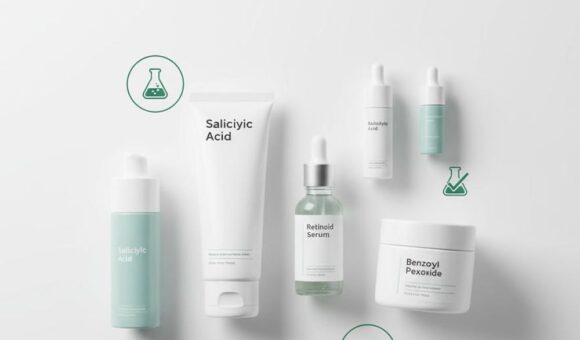
The Perfect Skincare Routine for Acne-Prone Skin
A good routine isn’t about piling on products, it’s about using the right ones, in the right order, consistently. Here’s how to structure a skincare routine for acne-prone skin, morning and night.
What Is the Best Morning Routine for Acne?
Keep mornings simple and protective:
- Gentle cleanser: removes overnight oil buildup without stripping skin.
- Treatment product (if tolerated): a lightweight niacinamide or azelaic acid serum works well in the morning since it’s less irritating than stronger actives.
- Moisturizer: even oily, acne-prone skin needs hydration to keep the barrier functioning.
- Sunscreen (SPF 30+): non-negotiable, especially if you’re using acne actives, which can increase sun sensitivity.
What Is the Best Night Routine for Acne?
Nighttime is when you introduce your stronger actives, since skin repairs itself while you sleep:
- Double cleanse if wearing makeup or sunscreen: first an oil or micellar cleanser, then a gentle foaming cleanser.
- Treatment step: this is where retinoids, benzoyl peroxide, or salicylic acid go. Check our ingredients guide if you’re not sure which fits your skin.
- Moisturizer: helps offset the dryness that comes with active ingredients.
How Often Should I Wash Acne-Prone Skin?
Twice a day is the standard recommendation, morning and night. Washing more often than that can strip the skin barrier and actually trigger more oil production, making breakouts worse. Always cleanse after sweating too.
What Skincare Mistakes Make Acne Worse?
Some of the most common routine mistakes include:
- Over-exfoliating: using acids, scrubs, and retinoids all at once irritates skin and delays healing.
- Skipping moisturizer: dry, compromised skin can overproduce oil to compensate.
- Picking or popping: increases inflammation and raises the risk of scarring.
- Switching products too fast: most actives take 6–8 weeks to show results; jumping between products before then makes it hard to tell what’s working.
- Skipping sunscreen: sun exposure can darken post-acne marks and irritate skin already sensitized by treatment.
Should I Moisturize If I Have Acne?
Yes, this is one of the most persistent myths in skincare. Oily and acne-prone skin still needs moisture. Skipping it can actually worsen breakouts by disrupting the skin barrier. Look for oil-free, non-comedogenic formulas that hydrate without clogging pores.
Consistency Matters More Than Complexity
A simple, consistent routine almost always outperforms a complicated one used sporadically. Give any new routine at least 6–8 weeks before judging results.
When Routine Isn’t Enough
If you’ve followed a solid routine and your acne isn’t going away, it may not be a skincare problem, it could need a treatment-level solution. Explore professional acne treatment options here.