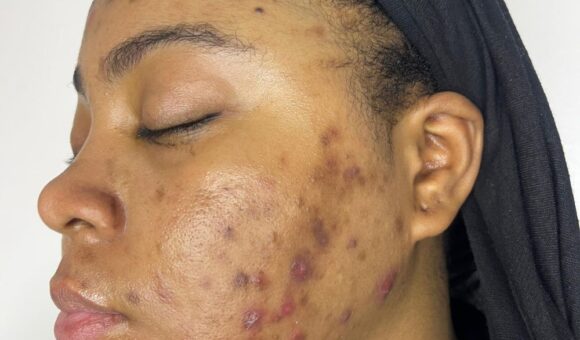
Treatment Options for Persistent Hyperpigmentation
If you’ve addressed the basics, sun protection, treating active acne, avoiding irritation, and your dark spots still aren’t fading, it may be time to look at treatment options beyond a standard skincare routine.
What Treatments May Help?
Treatment depends heavily on the type and depth of pigmentation you’re dealing with. Depending on the individual, options may include topical treatments and, in select cases, procedures such as chemical peels or laser/light-based treatments.
There’s an important consideration for darker skin tones, though: procedures that intentionally create controlled injury or inflammation can sometimes trigger additional pigmentation. Research on skin of colour supports careful patient selection and appropriately calibrated treatment settings, not simply choosing the most aggressive option available.
The right question isn’t “what’s the strongest treatment?” It’s “what treatment is appropriate for my pigmentation and my skin?”
Why Strongest Isn’t Always Best
Aggressive treatments used on the wrong skin type or the wrong kind of pigmentation can backfire, causing more inflammation and, ironically, more pigmentation. This is especially true for darker skin tones, where treatment selection needs to be more careful, not less.
This is one of the main reasons over-the-counter product-hopping often stalls out: without knowing the type and depth of your pigmentation, you’re essentially guessing.
When Should You See a Professional?
Consider getting a proper assessment if:
- Your dark spots aren’t improving
- The pigmentation keeps returning
- Your spots are becoming darker over time
- You’re not sure what originally caused them
- Pigmentation appeared without an obvious trigger
- You’ve tried several products without results
- You’re considering a chemical peel, laser, or other in-office procedure
A professional assessment can determine whether you’re dealing with post-inflammatory hyperpigmentation, melasma, or another condition entirely, and which treatment approach actually fits.
The Bottom Line
Persistent dark spots aren’t usually solved by reaching for a stronger product. They’re solved by identifying the type and depth of pigmentation you have, controlling what’s causing it, and matching treatment to your specific skin.
If you’ve worked through the basics, sun protection, controlling breakouts, patience, and pigmentation is still stuck, that’s the point where professional input tends to make the biggest difference.
Find out which treatment may be appropriate for your pigmentation. Book a consultation to have your pigmentation assessed and discuss suitable treatment options.
Related: How Long Does Hyperpigmentation Take to Fade? · Why Isn’t My Hyperpigmentation Fading? 7 Common Reasons